BIS Certification for Frying Pans, Deep Fat Fryers and Similar Appliances IS 302 (Part 1) IEC 60335-1
Category: BIS Certification
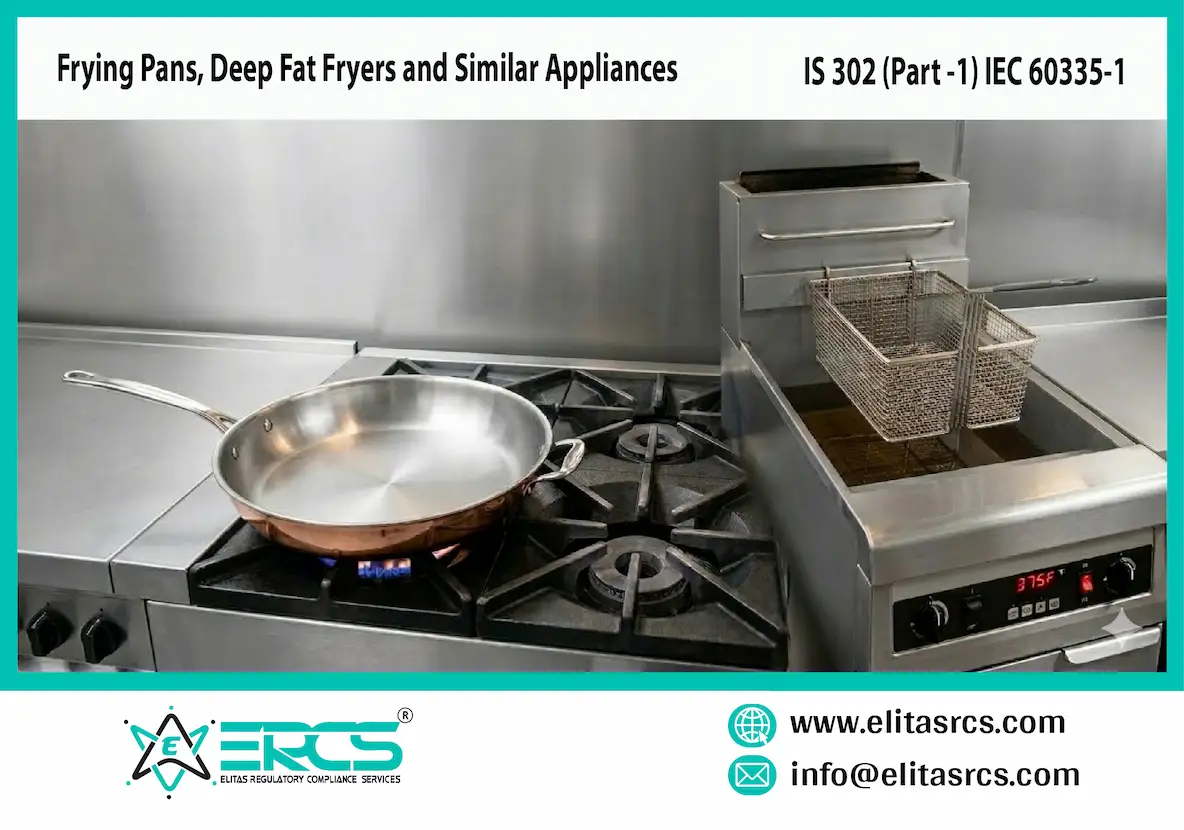
The demand for electric cooking products such as Frying Pans, Deep Fat Fryers and Similar Appliances become more popular due to their convenience and ease of use. Both manufacturers and importers of electric cooking products entering the Indian marketplace need to ensure that their products are safe to use, have acceptable levels of electricity, and are compliant with the governing laws and regulations of the country.
BIS Certification for electrical cooking equipment such as frying pans, deep fat fryers or other equipment of similar style are required under the Bureau of Indian Standards Act 2016 to comply with IS 302 (Part 1) IEC 60335-1 for the purpose of achieving safe thermal, mechanical and electrical performance standards, including the requirement of an ISI mark before they are allowed to be sold commercially within India.
Overview of Frying Pans, Deep Fat Fryers Certification under BIS
Frying Pans, Deep Fat Fryers, and Similar Appliances used to quickly prepare different types of fried foods. Most fryers are regularly used in homes, restaurants, hotels, and more, where a consistent heat source is required for safe cooking.
In India, consumers demand safe and reliable products. The appliances must follow the manufacturer's conformity to safety standards (IS 302 Part 1 / IEC 60335-1) that outline proper utility according to domestic electrical appliance specifications. Meeting these standards demonstrates to manufacturers/designers that their products will meet minimum levels of quality, safety, and warranty, allowing them to be sold in retail markets.
Key Specification and Safety Requirements:
- Mandatory Certification: Frying pans and deep fat fryers must comply with IS 302 (Part 1), as well as include the ISI mark.
- Focus on Safety: The major performance tests include electric shock protection, insulation, stability, and resistance to heat.
- Limitations on temperature control: There are stringent requirements for the way you control excessive heating and prevent electrical fires.
- General Coverage: Electric frying pans, deep fat fryers, and wok (5 litre capacity maximum) for home, individual, and light farmland use are included within the scope of the standard.
- Updated Standards: The 2024 version includes more stringent, current IEC 60335-1:2020 safety standards.
- Compliance Dates: Both old and new standards will be in effect until Feb 23, 2025. The old standard will be revoked after that date.
Benefits of ISI Mark Certification for Frying Pans, Deep Fat Fryers and Similar Appliances
The advantages of obtaining the ISI Mark on IS 302 Part 1 are as follows:
- Legal compliance & security to sell in India: Penalties, seizures of products and/or fines due to selling products containing no certification for the electric cooking appliance.
- Confidence & safety: Indicating the tested quality of appliances (electrical safety, temperature control, and no overheating), reducing the risk of accidents when using these products in the home.
- Increased brand credibility: Shows a product has met recognised Indian requirements for durability and performance.
- Access to the Indian marketplace: Along with the added advantage of being a certified manufacturer, thereby having a competitive advantage over non-certified inferior products.
Documents required for BIS Licensing on IS 302 (Part 1) IEC 60335-1
The following documents are needed to obtain a BIS Certificate for IS 302 (Part 1), IEC 60335-1:
- Application form, duly completed and signed
- Business registration (GST or incorporation certificate)
- Proof of the manufacturing unit's address
- Factory layout plan and flow chart of how products are made
- Listing of machinery used to manufacture and test the product
- Calibration Certificates for Testing Equipment
- Technical Specification Sheet for the Product
- Product Drawings and Circuits
- Authorised Indian Representative documents (for foreign manufacturers)
- Letter of Trademark Authorisation (if applicable)
Applicable Test Parameters for Frying Pans, Deep Fat Fryers and Similar Appliances Certification
In accordance with IS 302-1 / IEC 60335-1 there is a set of key safety/performance testing requirements, which are as follows:
- Each appliance must be labelled to reflect the appropriate operating voltage (typically <250V), power rating and any applicable safety warnings.
- Users must be presented with no opportunity to access live electrical parts of the appliance.
- The input power and amperage draw of the appliance will be verified to not exceed the rated inputs.
- Heating tests will establish the maximum handle, knob and surface temperature at which an appliance can operate and still be safe from causing burns.
- Leakage current and electric strength will verify that the appliance's insulation will provide no possibility of electrical shock and that it will be effective in containing any potential water leaks or moisture sources
BIS Certification Process of IS 302 (Part 1) IEC 60335-1
To obtain a BIS certification for your product, you need to adhere to the following steps:
1. Application Submission: Register on the BIS Portal, fill out the application to apply for a license.
2. Compile Documents: Gather the necessary documents, including factory licenses, documents related to quality control, and properties of raw materials used.
3. Laboratory Testing: Send samples of your product to a BIS-registered lab for chemical composition testing.
4. Questioning the License: After the completion of the inspection, examination, and verification of the test reports, the BIS grants the license to use the "Standard Mark".
The process can be obtained and certified for the Indian manufacturer and the foreign manufacturers as well:
BIS Certification India for Indian Manufacturers
BIS FMCS Certification for Foreign Manufacturers
BIS Certification Fees in India for IS 302 (Part 1) IEC 60335-1
Go through the table to know the cost of BIS Certification India for IS 302 (Part 1) IEC 60335-1:
|
S No. |
Particular |
Amount (INR) |
Remarks |
|
1. |
Application Fee |
1000 |
To be paid directly to BIS |
|
2. |
Audit Fee |
7000 |
To be paid directly to BIS |
|
3. |
License Fee |
1000 |
To be paid directly to BIS |
|
4. |
Sample Testing Fee |
As Applicable |
To be paid directly to BIS (Testing charges vary from product to product and lab to lab.) |
|
5. |
Minimum Advance Marking Fee |
As per the actual |
To be paid directly to BIS (Marking fee varies as per Indian Standard) |
|
6. |
Renewal Fee |
1000 |
To be paid directly to BIS |
|
7. |
Inclusion Fee |
5000 |
To be paid directly to BIS |
|
8. |
ERCS Pvt Ltd Service Fee |
Please contact info@elitasrcs.com |
|
|
Remarks |
Including all the taxes |
||
Why Choose ERCS Private Limited for ISI Mark Certification
ERCS Private Limited is the top BIS Certification consultant in India. They handle the entire process, including testing coordination and BIS portal management.
- Professional Advice on BIS: Proper authority for providing BIS Certifying Authorities with the necessary documents and submissions for certification of various types of products throughout India.
- Complete Certification Assistance: Complete support from the first documents for certification to submission, all testing, and finalising BIS Approval.
- Extensive Knowledge of Standards: Extensive knowledge of IS 302 (Part 1) / IEC 60335-1 requirements for electrical frying appliances and related products.
- Quick Certification Process: Fast procedures and expert knowledge give confidence in the certification process.
- Manufacturers/Importers Support: Support for both Indian manufacturers and foreign manufacturers entering the Indian market.